
If you have an incredibly picky eater, you have probably heard it a hundred times from well-meaning friends or relatives: “Just wait it out. They won’t starve themselves. They’ll eat when they get hungry enough.”
Sure. Try telling that to a parent whose toddler literally gags at the sight of a banana or cries when a new brand of chicken nuggets is put on their plate.
When Food Triggers Anxiety
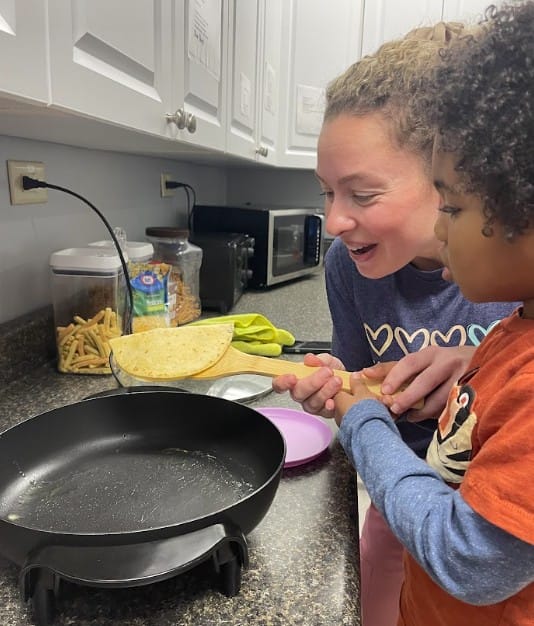
When your child has a genuine feeding challenge, that advice doesn’t just feel dismissive—it is actually wrong. Kids aren’t refusing dinner just to ruin your evening. Their bodies are actively telling them that eating is unsafe or physically uncomfortable. At Therapy Smarts, our feeding specialists in Durham and Chapel Hill see this every single day. It usually boils down to a mix of sensory panic and weak mouth muscles, and it is something we can actually fix.
Let’s talk about the sensory panic first. Eating is pretty wild when you stop and think about it. It uses every single one of your senses at the exact same time. For a kid who gets easily overwhelmed, just smelling roasted broccoli or touching a wet noodle can trigger a massive fight-or-flight response.
To help with this, we use something called the S.O.S. (Sequential Oral Sensory) approach. We never, ever force a child to take a bite. Instead, we might just start by letting the new food sit on a plate across the room. A few days later, we might poke it with a fork. Then maybe we smell it. We move incredibly slowly so your child’s nervous system stays totally calm.
Building Up Weak Mouth Muscles
Addressing the physical side of things. Chewing is a workout. If a child has low muscle tone, their mouth gets exhausted quickly. They might just mash food against the roof of their mouth because they don’t know how to move their tongue side-to-side. That is a massive choking hazard, and frankly, it is scary for them.
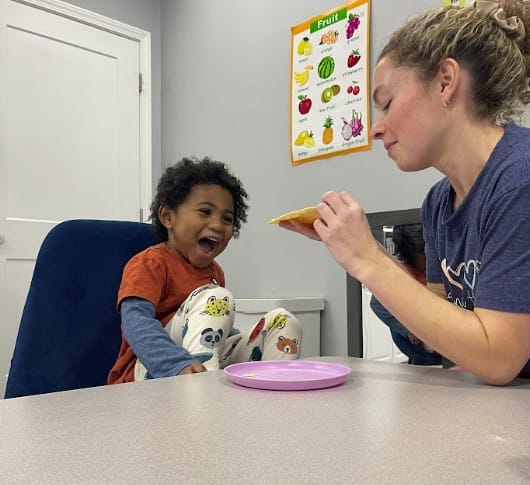
Our Speech-Language Pathologists handle this part by treating therapy like a gym for the mouth. We practice blowing bubbles, using chewy tubes, and doing targeted exercises to build up jaw strength so eating doesn’t feel like running a marathon.
The Magic of Messy Play
What about textures? If your kid hates the feeling of clothing tags or loud noises, there is a very good chance they hate sticky or mushy foods, too. This is where our Occupational Therapists bring in the messy play. We might literally paint the table with pudding or drive toy cars through applesauce. It sounds like a disaster, but there is a real purpose to it. Getting their hands messy without the pressure of having to eat the food lowers their anxiety. Once they are okay touching it, taking a bite later on isn’t such a massive deal.
But here is the catch. We only see your child in the clinic once or twice a week. You are the one doing the heavy lifting at the dinner table every night.
We spend a lot of time helping parents drop the power struggles at home. We teach things like “food chaining”—if they only eat fast-food fries, we might try thick steak fries next, then eventually roasted potatoes. We also talk a lot about splitting up the mealtime jobs. You decide what goes on the plate. Your child decides if they eat it. Period. It takes the pressure completely off.

Contact Therapy Smarts today to schedule a comprehensive feeding evaluation
Don’t let stressful mealtimes become your family’s new normal. The sooner feeding challenges are identified, the sooner your child can begin building healthy eating habits and confidence around food.
Together, we can turn mealtime from a daily struggle into an opportunity for growth, learning, and family connection. Reach out to our Therapy Smarts pediatric team (we serve Wake, Durham, and Orange counties) with pediatric clinics in Chapel Hill and Durham to schedule an appointment, or grab our free developmental checklist to see where your child’s skills are currently at.