
Therapy Smarts is proud to announce we have been voted, “Best Therapists” in Chapel Hill & Durham!


Physical Therapy for Kids
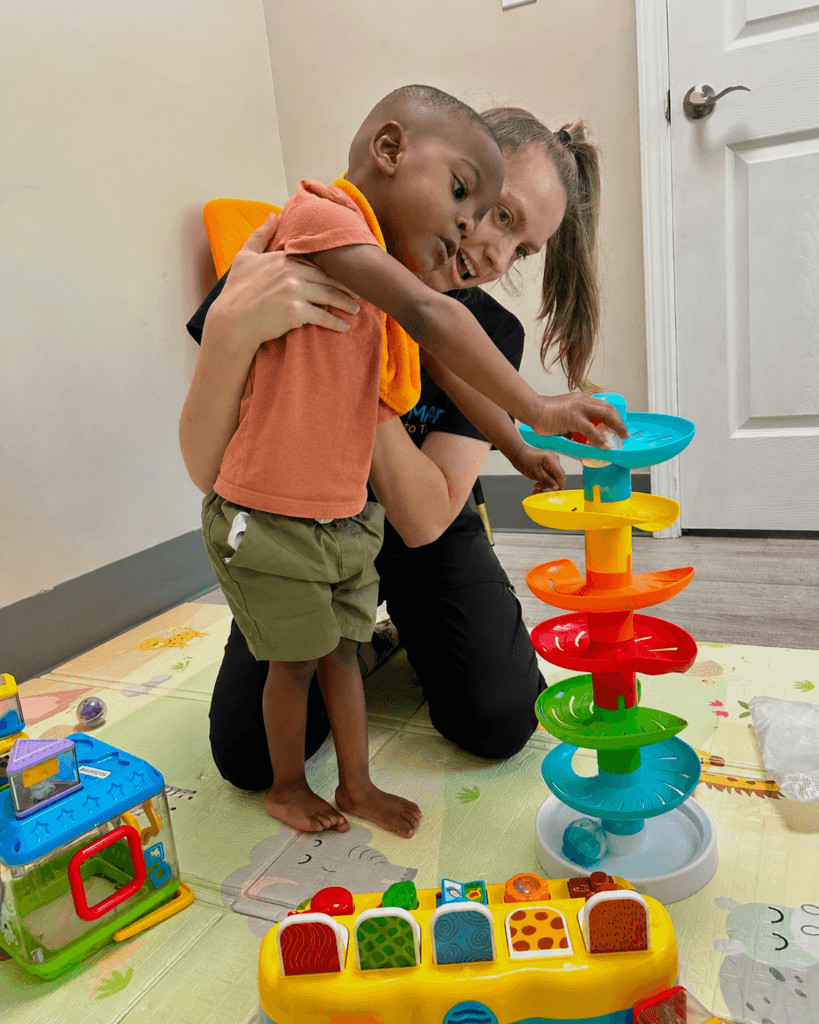
Movement plays a vital role in a child’s development. While every child reaches milestones at their own pace, delays in movement can sometimes lead to challenges.
Pediatric physical therapy addresses limitations related to gross motor skills, which are tasks that involve large muscle groups of the body such as sitting, walking, and jumping by working to improve strength, range of motion, balance, and coordination and ultimately help a child improve their ability to participate in physical activity and meet developmental milestones.
Physical Therapy Services for Children
Physical therapy is about helping your child build the strength and confidence to live life to the fullest. We focus on empowering them with the independence to safely navigate their surroundings, whether at home, on the playground, or in the classroom, so they can explore and play alongside family and friends.Beyond therapy sessions, our pediatric physical therapists also help families with the process of attaining appropriate orthotics, prosthetics, and durable medical equipment (DME) including wheelchairs, standers, gait trainers, and much more.
Does My Child Need Physical Therapy?
Wondering if physical therapy could help your child? Check out the difficulties below- if any of these sound familiar, an evaluation treatment would be appropriate.
- Brachial plexus injuries
- Cerebral palsy
- Coordination and balance challenges
- Dandy-Walker syndrome
- Developmental delay
- Down syndrome
- Fragile X syndrome
- Gross motor delay
- Hydrocephalus
- Hypotonia /Imbalance of muscle tone (often called low or high muscle tone)
- Infants born prematurely
- Muscular dystrophies
- Plagiocephaly
- Scoliosis
- Spinal cord injuries
- Torticollis (“Wry Neck”)
- Tummy Time
Pediatric Physical Development & Milestones Checklist
If you have any questions about your child’s physical development, browse our parent checklist below and give us a call today.
- Tracks an object
- Holds head in alignment
- Moves arms and legs when laying on back
- Lifts head a little when laying on belly, can prop on elbows
- Brings hands together when laying on back
- Props on elbows in prone with neck extension
- Rolls back to side
- Grasps rattle when placed in hand
- Likes looking at a human face more than other things
- Responds to a smile with a smile
- Looks into caregiver’s face and eyes with interest
- Reaches toward and touches toy
- Hits at dangling objects with hands
- Sitting using hands for support and starting to sit independently
- Grabs both feet and holds them when on back
- Brings feet to mouth
- Reaches to a toy when playing on belly
- Props on extended arms when on belly
- Begins to belly crawl
- Rolls back to belly
- Holds and shakes a toy
- Puts fingers in mouth
- Smiles at self in front of mirror
- Assumes hands and knees position (all fours)
- Transfers from sitting to hands and knees position (all fours)
- Rocks back and forth on hands and knees for 5 seconds
- Creeps forward on hands and knees
- Scoots forward in sitting for 3 feet
- Pivots in sitting 90 degrees to both sides
- Walks with two hands held
- Transitions to stand using hands and feet
- Walks 8 feet with one hand held
- Walks 5 steps independently
- Traps a ball with arms and hands in sitting
- Maintains kneeling position on knees for 5 seconds
- Stoops to retrieve object from the floor without using a stable surface and takes 3 steps
- Rolls a ball 3 feet forward in sitting
- Flings a small ball while standing
- Creeps downstairs independently
- Walks upstairs with both rails – non alternating
- Lifts foot to contact ball
- Throws ball overhand without loosing balance
- Walks fast
- Walks Backward 5 steps
- Walks downstairs with support of one finger, non-alternating
- Runs forward 10 feet
- Stands heel to toe on a line for 2 seconds
- Kicks ball 3 feet
- Throws ball overhand 3 feet
- Rides a push bike
- Jumps forward 4 inches
- Jumps up 2 inches
- Jumps down from step
- Walks upstairs without rail
- Throws ball underhand 3 feet
- Kicks ball 3 feet with direction
- Climbs up jungle gym
- Walks down 4 steps without rail
- Walks backward for 10 feet
- Presents arms and attempts to catch ball
- Negotiates slide independently
- Takes three consecutive steps when walking on a line – hands on hips
- Walks upstairs with a rail alternating feet
- Throws ball 7 feet overhand
- Walks across a 6 inch balance beam
- Runs 45 feet in 6 seconds
- Jumps forward 26 inches
- Throws ball overhand
- Throws ball underhand to hit target from 5 feet
- Stands on one foot with hands on hips for 5 seconds
- Walks 4 feet on a line with hands on hips
- Catches large ball hands only 5 feet (not using chest to trap the ball)
- Climbs down rock wall independently
- Stands on tiptoes with arms overhead for 3 seconds
- Walks downstairs without a rail using an alternating pattern
- Hops forward 6 inches on 1 foot
- Throws ball overhand to hit target from 5 feet
- Stands on tiptoes for 8 seconds
- Walks backwards on a line 5 steps with hands on hips
- Performs a forward roll
- Gallops 10 feet
- Throws overhand to hit target from 12 feet
- Bounces a ball so it hits floor then wall
- Catches a small ball thrown from 5 feet hands only
- Rides a 2 wheeler with training wheels
- Rides a 2 wheeled scooter
- By 4.5 years old stands on one foot for 6 seconds
- Imitates 4 positions with arms and legs
- Jumps forward 36 inches
- Performs a turning jump
- Hops forward 3 feet on each foot
- Jumps over 10 inch hurdle
- Skips 8 feet
- Pumps self on swing
- Able to jump over a partner turned jump rope
- Able to roller skate – without coordination
- Stands on one foot for 10 seconds with hands on hips
- Performs 3 sit-ups in 30 seconds
- Jumps sideways over a line 3 cycles
- Skips 10 feet
- Skips 10 feet
- Jumps over 10 inch hurdle
- Skips 10 feet
- Able to jump over a self turned jump rope several consecutive times
- Performs 5 sit-ups in 30 seconds
- Performs 8 push-ups in 20 seconds
- Hops 20 feet in 6 seconds
- Kicks a ball 12 feet in the air
- Bounce catches a ball with one hand
- Takes three consecutive steps on a 2 inch balance beam
- Able to roller skate – with coordination
- Able to perform the monkey bars
- Drop kicks a ball with direction
- Able to Rollerblade
- Runs with good coordination
- Able to perform sit-ups
- Skips, alternating feet
- Performs jumping jacks
- Able to hop on one foot several times consecutively
- Throws a ball and hits target
- Swings without being pushed & pumps legs to keep the swing going
Signs It Is Time For A Physical Therapy Evaluation
As a parent, you have a unique insight into your child’s development. If you’ve noticed certain challenges or have concerns about their physical milestones, trusting your intuition is an important first step. An evaluation with a pediatric physical therapist may be beneficial if your child shows difficulty in one or more of the following areas:
- Doesn’t like tummy time
- Poor head control while on their stomach or while sitting
- Holds head tilted to one side or only looks in one direction
- Concerns about posture and positioning
- Delays in motor development, such as:
- Not yet sitting by 6 months old
- Not crawling by 10-11 months old
- Not walking by 18 months old
- Walks on toes
- Clumsy/difficulty with balance and coordination
- Falls frequently and/or has trouble stopping falls and protecting their head and face
- Doesn’t skip, jump, or hop on one foot
- Poor endurance/difficulty keeping up and playing with friends
- Sports and non-sports related injuries
Have Questions? We are Here to Help
Child Physical Therapy: Who can Benefit ?
Curious if physical therapy might be right for your child? Our team is here to help your child get stronger, feel more confident, and enjoy moving and playing. If you’ve spotted any challenges with movement or noticed milestones taking longer, scheduling a physical therapy evaluation can really help. Take a look below for some of the most common conditions we support:
Testimonials
Frequently Asked Pediatric Physical Therapy Questions
Physical therapy (PT) helps children improve strength, balance, coordination, and mobility. It can benefit children with:
- Developmental delays (e.g., late walking)
- Torticollis or flat head syndrome in infants
- Cerebral palsy or neuromuscular conditions
- Orthopedic injuries or recovery after surgery
- Poor posture, core strength, or balance
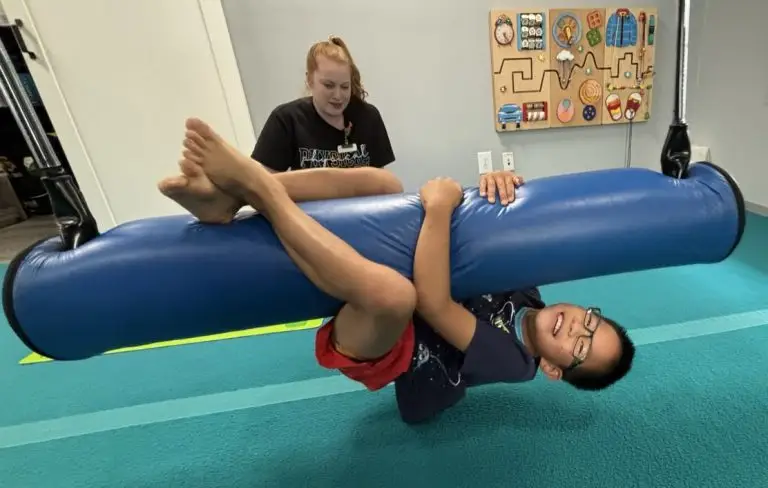
Yes, but in a fun, play-based way! Our physical therapists use obstacle courses, games, and child-friendly exercises to improve your child’s physical abilities through a play therapy approach.
Contact Us Now To Schedule An Appointment
Please fill out the form below and someone will get back with you as soon as possible.