
When your child struggles with reading — mixing up letters, skipping words, reading slowly or with great effort — it can be heartbreaking. Many parents hope for a “quick fix.” But the truth is: there’s no magic pill. Instead, what works best (and is backed by decades of research) are structured, individualized educational therapies that meet dyslexic children where they are and build reading skill step by step.
For parents navigating dyslexia, approaches rooted in Multisensory Structured Language Education (MSLE), especially the Orton-Gillingham approach, remain the gold standard. Combined with phonics-based reading programs and assistive technologies, these therapies can make a huge difference — often turning reading from a struggle into a strength.
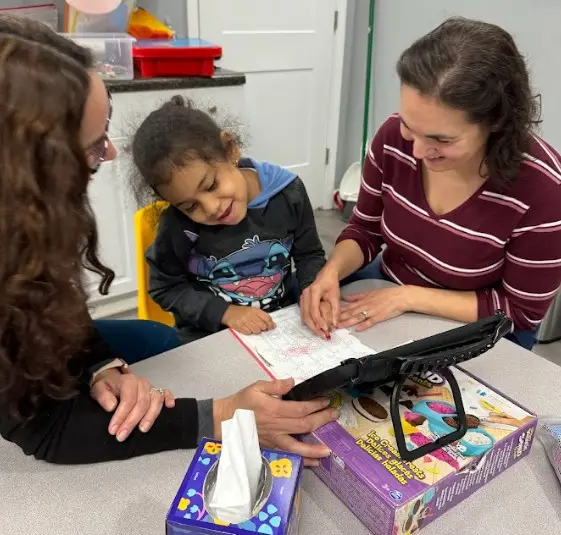
What Is Dyslexia — and Why Intervention Matters Early
Mayo Clinic defines dyslexia as a learning disability that makes it difficult to identify speech sounds and connect them to letters and words — a process essential for decoding. Pediatric Dyslexia isn’t about intelligence: many children with dyslexia are highly bright and creative.
However, without targeted help, children often fall behind. The sooner the intervention begins, the better the long-term results — giving them a fair chance to keep up academically, build confidence, and avoid frustration or anxiety.
What Is Multisensory Structured Language Education (MSLE) & Why It Works
The term “Structured Literacy” — used by the International Dyslexia Association (IDA) — refers to a set of instructional methods and content that are explicit, sequential, systematic, and cumulative.
In practice, MSLE means:
- Multisensory: Teaching uses sight, sound, and touch/movement simultaneously — children see, hear, and write letters and words. This reinforces memory and helps the brain build stronger connections.
- Structured & Sequential: Instruction begins with the simplest building blocks (sounds, letters) and gradually builds up to syllables, words, spelling rules, morphology, and writing. Each new concept builds on previously mastered skills.
- Explicit & Direct: Rather than expecting the child to “pick up reading naturally,” the teacher explicitly teaches phonemic awareness, sound–symbol mapping, spelling rules, decoding, and encoding — all in a clear, step-by-step fashion.
According to IDA, Structured Literacy (i.e., MSLE/Orton-Gillingham) remains the most effective evidence-based approach for children with dyslexia and related reading difficulties.
The Orton-Gillingham Approach: What Parents Should Know
The Orton-Gillingham Approach — developed in the early 20th century — is the most widely known and used MSLE method.
Key characteristics of Orton–Gillingham
- Multisensory: Lessons involve auditory (listening), visual (seeing letters/words), and kinesthetic (writing/tracing) modalities. For example: a child might say the sound of a letter, see the letter, and write it — reinforcing learning deeply.
- Individualized & Diagnostic: Instruction is tailored to the child’s current skill level, strengths, and weaknesses. As children master one concept, the teacher introduces the next — pacing appropriately.
- Explicit & Systematic Phonics: Sound–symbol relationships (phonics), spelling rules, syllable types, morphology — every piece is taught explicitly and systematically.
- Cumulative & Mastery-Based: Concepts are revisited and reinforced before moving on. This prevents gaps and builds solid reading foundations.
When delivered by trained instructors (many programs are accredited via IDA standards) and practiced consistently, Orton-Gillingham can transform reading struggles into success stories.
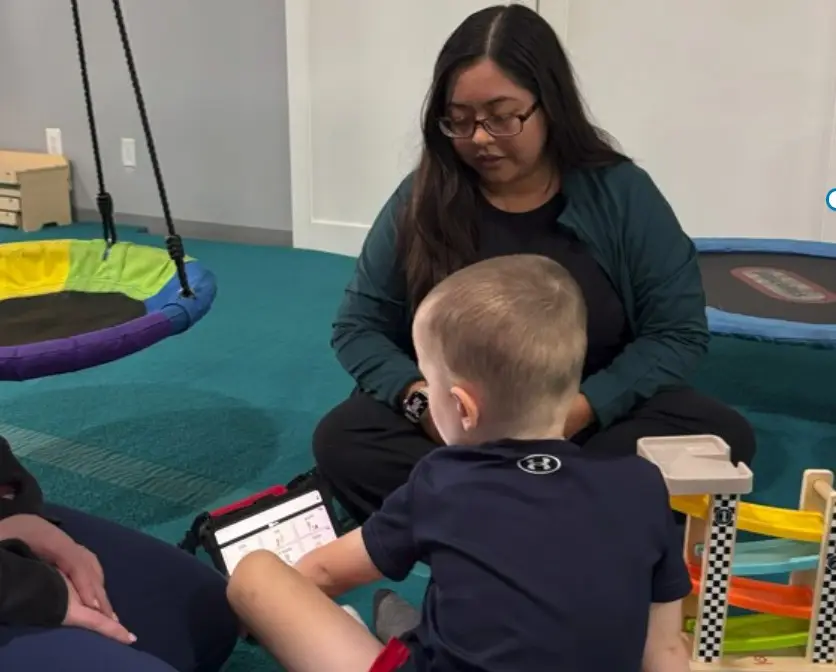
Phonics Instructions & Reading Fluency
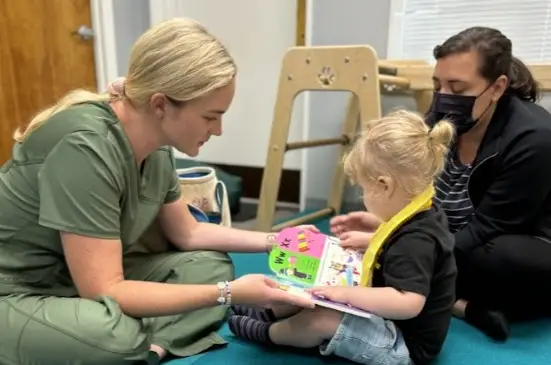
Speech-Language Pathologists (SLPs) typically utilize phonics-based reading programs during therapy, many of which are grounded in the MSLE or Orton-Gillingham methodologies.
Why phonics matters: Dyslexia often involves difficulty with decoding — i.e., breaking down words into sounds, then blending them. Phonics-based programs reinforce decoding skills, helping children read unknown words more fluently rather than guessing.
Once decoding becomes automatic, children can focus more on comprehension — unlocking access to grade-level reading and textbooks, building confidence, and reducing reading fatigue.
According to broader dyslexia guidelines, effective reading instruction for dyslexic children should include phonemic awareness, phonics, fluency, vocabulary, and comprehension strategies — delivered systematically and intensively.
What Parents Should Know When Choosing Therapy
If you’re looking for dyslexia therapy for your child, here are some guiding principles:
- Seek programs that are explicitly labeled “Structured Literacy,” “Multisensory,” or “Orton-Gillingham-based.” These follow scientifically supported methods.
- Choose trained SLP. Many reputable programs are accredited to match the standards of the International Dyslexia Association.
- Expect small-group or one-on-one instruction, especially when starting out. This ensures pacing can be individualized.
- Consistency matters. Progress takes time; regular sessions, practice at home, and patience often lead to breakthroughs.
- Use assistive technology as a supportive aid, especially for reading, writing, homework and self-learning — but not as a substitute for real instruction.
The Emotional & Long-Term Impact: Why Therapy Is Worth It
Untreated dyslexia isn’t just about poor grades. Over time, children may feel frustration, low self-esteem, or a sense of falling behind peers. For many, school becomes a source of anxiety rather than growth.
But with the right therapy — structured literacy instruction, multisensory teaching, phonics-based reading, and assistive technology support — children can:
- Catch up academically and access grade-level reading and learning.
- Build confidence in their abilities — not just academically, but in self-expression.
- Develop lifelong reading and writing skills, which can support higher education, career, and personal growth.
- Discover their strengths beyond reading — creativity, problem-solving, oral expression — and not be defined solely by their reading struggles.
Hope, Help & a Plan
If your child is struggling with reading, know this: dyslexia isn’t a dead end. With early identification and the right support, many children do more than just catch up—they excel. As a parent, you are your child’s strongest advocate, and you don’t have to navigate this climb alone.
At Therapy Smarts, we provide the qualified, evidence-based programs your child needs to turn reading from a daily battle into a gateway for lifelong opportunity. We partner with you to pair professional therapy with the right tools and support for the home, ensuring progress is patient, consistent, and encouraging.
The journey may feel uphill now, but with the right foundation, that climb leads to extraordinary growth and newfound confidence.
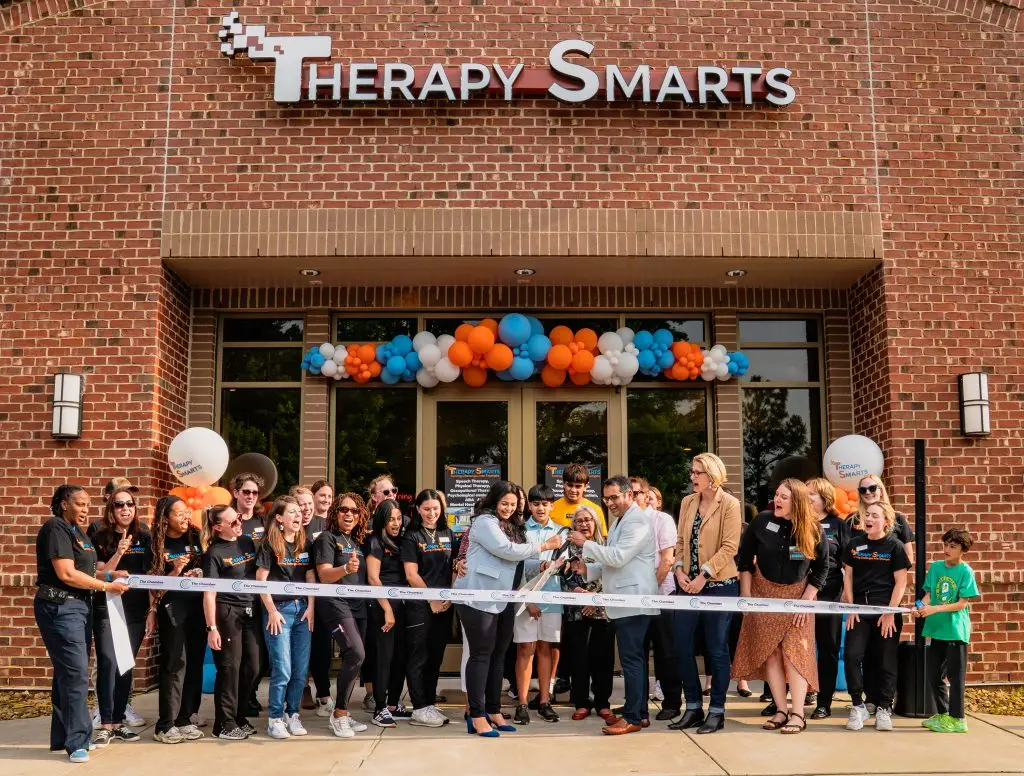
Take the First Step Toward Growth
Let us help you build that foundation. Contact Therapy Smarts today to learn more about our Pedhttps://therapysmarts.net/dyslexia/iatric Dyslexia and Speech & Language Therapy programs.
- Our Mission: Helping your child find their voice and their love for learning.
- Visit Us: Locations serving Durham, NC and Chapel Hill, NC.
- Call Us: Reach our team directly at 919-378-1340.