The first day of kindergarten is a milestone that families remember for years to come. It marks the beginning of a new chapter filled with friendships, learning, independence, and growth. While parents often spend weeks preparing with backpacks, lunchboxes, and school supplies, many children are still wondering one big question:
“What’s going to happen?”
For young children, the unknown can feel overwhelming. The more they understand what to expect, the more confident they often feel walking into school.
Think of it this way: A football coach doesn’t simply tell players, “Go win the game.” They walk through every play, explain each position, and prepare everyone for what comes next. Children benefit from that same kind of coaching. Breaking the day into small, predictable steps helps make a big transition feel much more manageable.
Whether your child is excited, nervous, shy, or experiencing anxiety, preparing them ahead of time can make all the difference.
Why Children Need a “Play-by-Play”
Adults naturally fill in the blanks because we’ve experienced school before. Kindergarteners haven’t. Many children picture the first day differently than reality—or they don’t know what to picture at all.
Walking through the day in advance helps children:
- Feel more prepared
- Reduce anxiety about the unknown
- Build confidence
- Practice routines before they happen
- Know what adults expect
- Better manage transitions
For children with sensory processing differences, anxiety, autism, ADHD, or communication challenges, this step-by-step preparation is even more valuable because it replaces uncertainty with predictability.
Practice the First Day Before It Happens
Several days before school starts, talk through the morning just like you’re rehearsing for a big game. Instead of saying: “You’ll be fine.” Try walking through exactly what will happen.
For example: “Tomorrow morning we’ll wake up, get dressed, eat breakfast, brush your teeth, and drive to school in mommies car. We’ll park the car and mommy will walk in the front door with you. There will probably be lots of kids and teachers outside saying hello. It might feel loud because everyone is excited.”
Then continue describing the next steps.
Give Your Child a Classroom Playbook
Children thrive when they know what comes next. Your conversation might sound something like this:
“When you get to your classroom, your teacher will probably smile and say hello.”
“You might be asked to hang your backpack on a hook.”
“Your teacher may show you where to put your lunchbox.”
“Then you’ll find your name on a table or desk.”
“Some children will color while everyone arrives.”
“The teacher will tell everyone what to do next.”
“If you’re not sure what to do, you can always ask your teacher.”
These details may seem obvious to adults, but they’re incredibly reassuring for children.
If Parents Can’t Walk Into the Classroom
Many schools now ask parents to say goodbye outside the building or at the classroom door. This can feel much harder for parents than children—especially if it isn’t discussed beforehand. Prepare your child several days before school begins.
You might say:
“This year, I may not be able to walk into your classroom with you. A teacher will help you find your room. That’s okay because your teachers already know exactly what to do.”
Explain exactly what the goodbye will look like.
“We’ll give each other a hug.”
“I’ll tell you I love you.”
“You’ll walk inside with your teacher.”
“I’ll go to work, and later I’ll come back to pick you up.”
Knowing the plan ahead of time helps children feel more secure because the separation isn’t a surprise.
What to Say When Your Child Gets Upset
It’s completely normal for children to cry, cling, or become emotional during drop-off. Your job isn’t to eliminate every feeling. Your job is to help them move through those feelings safely.
Instead of saying:
- “Don’t cry.”
- “You’re okay.”
- “There’s nothing to be scared of.”
Try validating what they’re experiencing while reinforcing that they’re safe.
Examples include:
“I know this feels really hard.”
“It’s okay to feel nervous when something is new.”
“Your teacher is going to take great care of you.”
“I know you wish I could stay longer.”
“I always come back after school.”
“You can be brave even when something feels scary.”
Avoid sneaking away while your child is distracted. Although it may seem easier in the moment, children often become more anxious when they discover a parent disappeared unexpectedly. A calm, predictable goodbye builds trust.
Practice Independence at Home
Kindergarten brings many new responsibilities and fun new tasks for a child to master. Practice everyday routines before school begins, including:
- Putting on and taking off a backpack
- Opening lunch containers
- Zipping coats
- Washing hands independently
- Carrying a lunch tray (using a lightweight tray at home)
- Following two- and three-step directions
- Cleaning up toys after playtime
- Asking an adult for help
The more familiar these skills become, the more confidence children build. If they cannot open their lunchbox at home, it is likely they will struggle at school as well.
Keep Goodbyes Short and Predictable
Long goodbyes often make transitions harder. Choose a simple goodbye routine such as:
Hug.
High five.
“I love you.”
“Have a great day.”
“I’ll see you after school.”
Then confidently leave. Children often recover within minutes after parents leave, even if there are tears during the transition.
Remember That Every Child Adjusts Differently
Some children run into the classroom without looking back. Others need several weeks before school feels comfortable. Neither response predicts long-term success. Adjustment takes time, and that’s perfectly normal.
Celebrate small victories along the way:
- Walking into the building independently
- Saying hello to the teacher
- Hanging up their backpack
- Trying a new activity
- Making a new friend
- Sharing one exciting part of their day
Each of these moments are an important milestone worth recognizing. If you feel as though your child may be experiencing school anxiety, sensory challenges, or your curious about their development- Therapy Smarts is here for you every step of the way!
Call today to schedule an evaluation or to hear how Therapy Smarts helps kids turn their challenges into triumphs one session at a time!
(919) 378-1340.
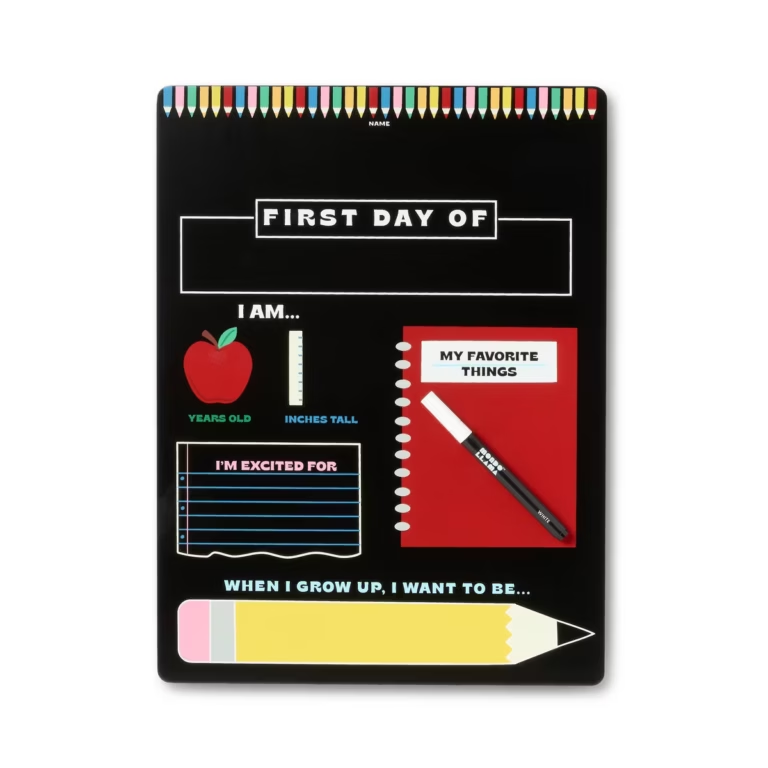
Make This Milestone Memorable
Here are a few items you can purchase before school starts to make fun memories.

ABOUT THERAPY SMARTS
Through play therapy, exploration of their environment, and joyful engagement- Therapy Smarts of Durham and Chapel Hill help improve your child’s communication, motor, behavior, & social skills. Click below to learn more about our services.
JOIN OUR TEAM
Are you a pediatric therapist looking to grow your career with a supportive, innovative team? Join Therapy Smarts of Durham and Chapel Hill — recently ranked #1,792 on Inc. Magazine’s 2025 Inc. 5000 list of fastest-growing companies in America!
We’re passionate about helping children thrive — and helping our team members do the same. Apply today!