For many families, mealtime is meant to be a moment of connection, nourishment, and routine. But for some children, it can quickly become a source of stress, frustration, and concern. Maybe you’ve heard your child say things like, “That’s yuck,” “Eww,” or a firm “No!” when it’s time to try something new—especially at mealtime.
In the early toddler years, hearing your child say “no” (often loudly and repeatedly!) is completely normal. This stage is a big part of development—toddlers are beginning to discover their independence, test boundaries, and learn that they have control over their choices. Saying “no” is one of the first ways they can express preferences, communicate discomfort, and assert themselves. It can show up during play, routines, and especially at mealtimes when new or unfamiliar foods are introduced.
However, there are times when “no” goes beyond typical toddler behavior. If your child consistently refuses entire food groups, has a very limited diet, struggles with textures, gags frequently, or mealtimes become stressful for the whole family, it may be a sign of a deeper feeding or sensory challenge.
If your child is a picky eater, refuses certain textures, or struggles during meals, you are not alone—and more importantly, there is help.
When “Picky Eating” Feels Like More
It’s common for children to go through phases of selective eating. However, when mealtime challenges persist, intensify, or impact growth and nutrition, it may be more than just picky eating.
Parents and pediatricians often notice signs such as:
- Refusing entire food groups
- Eating only specific textures or colors
- Gagging, choking, or coughing during meals
- Difficulty chewing or swallowing
- Poor weight gain or nutrition
- Mealtime anxiety, tantrums, or avoidance
These challenges can be overwhelming for families and may impact a child’s development and relationship with food. According to Feeding Therapy at Therapy Smarts, feeding difficulties can stem from sensory, motor, or a combination of both underlying causes, which require specialized support to address effectively.
Why Feeding Therapy Matters
Nutrition plays a critical role in a child’s growth, brain development, and overall well-being. But feeding is about more than just eating—it’s also about:
- Sensory exploration
- Motor coordination
- Emotional regulation
- Independence and confidence
Without proper support, children may develop long-term aversions to food, nutritional deficiencies, or negative mealtime experiences that carry into later childhood. That’s where feeding therapy makes a meaningful difference.
How Feeding Therapy Works at Therapy Smarts
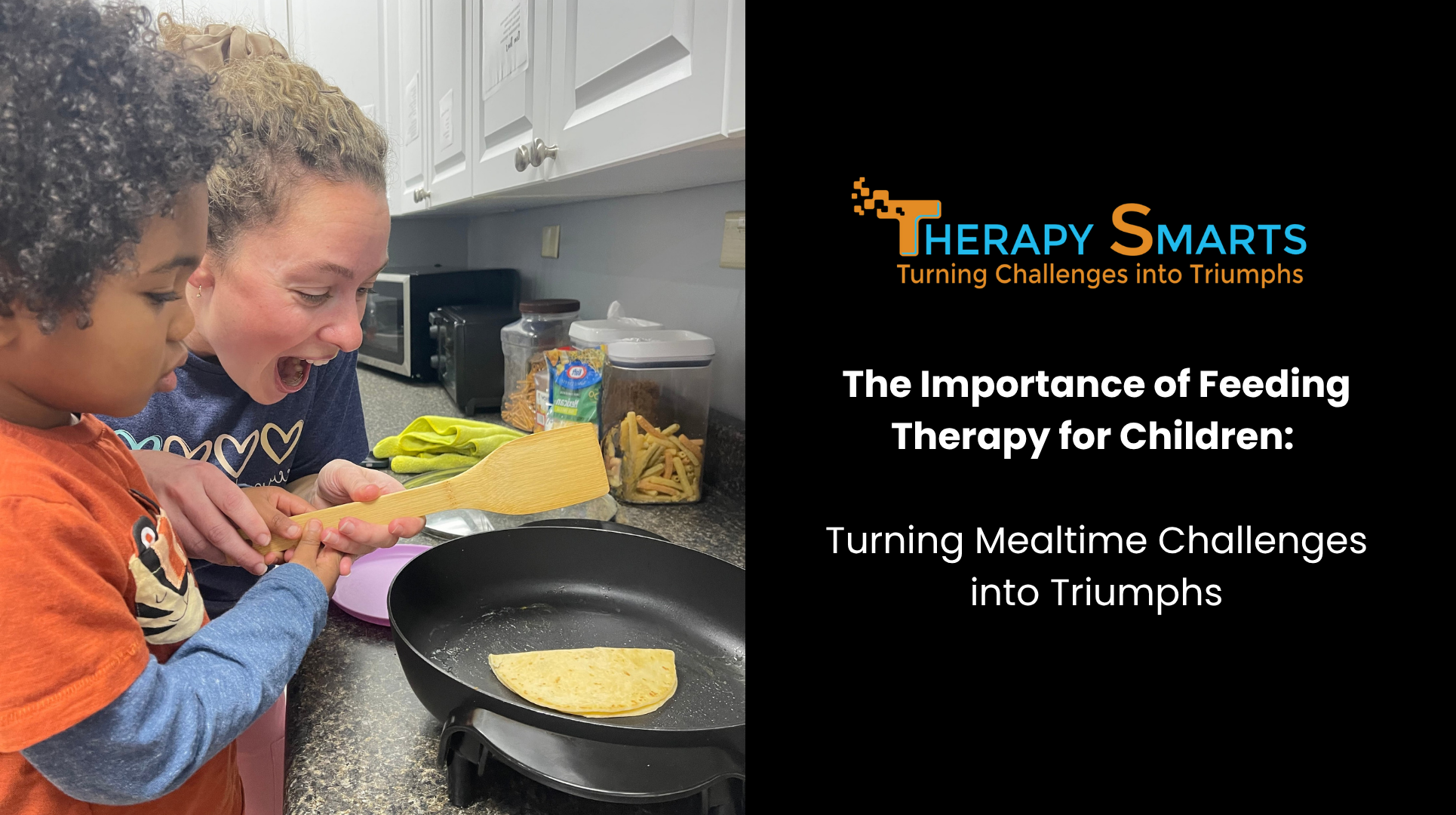
At Therapy Smarts, feeding therapy is a specialized, individualized service provided by trained occupational and speech therapists who understand the complexity of feeding challenges. Feeding therapy, is provided by a trained occupational or speech therapist to teach your child how to eat or eat better. During the evaluation process, we will discover your child’s underlying issues to eating. This may be sensory, motor, or a combination of both.
The process begins with a comprehensive evaluation to identify the root cause of your child’s feeding difficulties—whether sensory, oral-motor, behavioral, or medical.
From there, a personalized therapy plan is developed to help your child:
- Safely explore new foods
- Improve chewing and swallowing skills
- Build tolerance to different textures
- Develop positive mealtime behaviors
- Increase nutritional variety
Therapy sessions are play-based, supportive, and pressure-free, helping children feel safe while gradually expanding their comfort with food.
A Parent-Centered, Child-Led Approach
One of the most important aspects of feeding therapy is meeting the child where they are—without forcing or rushing progress.
As Ms. Margaret, COTA at Therapy Smarts, beautifully shares:
“Feeding and ensuring adequate nutrition for a growing child is challenging because they are already very busy learning who they are as individuals which is a lot to take on. While nutrition during childhood is crucial for development, it is just as important to provide children with autonomy, sensory implementations, and most importantly, positive experiences and associations with new foods. By providing children with feeding therapy, they can expand their feeding horizons in a healthy way and at their own pace, leading to amazing, long term results.”
This philosophy reflects the heart of Therapy Smarts—building confidence, not pressure, and creating lasting, positive relationships with food.
Why Early Intervention Is Key
The earlier feeding challenges are addressed, the easier it is to:
- Prevent long-term food aversions
- Support healthy growth and development
- Reduce stress for both child and family
- Build lifelong healthy eating habits
Early intervention can truly change the trajectory of a child’s relationship with food and overall well-being.
Supporting the Whole Child—And the Whole Family
Feeding therapy doesn’t just help children—it supports parents too.
At Therapy Smarts, families receive guidance, strategies, and education to continue progress at home. With a full range of pediatric therapy services—including occupational therapy, speech therapy, physical therapy, ABA, mental health services, and psychological evaluations—everything your child needs is available under one roof.
When to Take the Next Step
If mealtimes feel stressful, limited, or concerning, trust your instincts. You know your child best.
Feeding therapy can be the first step toward:
- More peaceful meals
- Greater food variety
- Improved nutrition
- Increased confidence for your child
Because every child deserves to feel successful—not just at the table, but in every part of their development.
If you are interested in learn more about our feeding therapy, please click the button below.
Do you want to check your child’s development?
We have provided a simple yet effective questionnaire to determine if your child’s development is on track or if it would be wise to consider taking steps to ensure your little one’s future success. Just take a few minutes to complete the quiz, fill out some information and check all the boxes that apply. (This take approximately 15 minutes.)
If you have any questions about our services, would like to learn more about how we support children and families, or are ready to schedule an appointment with one of our therapists, we’re here to help. Our team would be happy to talk through your concerns, answer any questions, and guide you through the next steps.
Please feel free to call our main office line at (919) 378-1340 to connect with us today. We look forward to supporting your family.
ABOUT THERAPY SMARTS
Through play therapy, exploration of their environment, and joyful engagement- Therapy Smarts of Durham and Chapel Hill help improve your child’s communication, motor, behavior, & social skills. Click below to learn more about our services.
JOIN OUR TEAM
Are you a pediatric therapist looking to grow your career with a supportive, innovative team? Join Therapy Smarts of Durham and Chapel Hill — recently ranked #1,792 on Inc. Magazine’s 2025 Inc. 5000 list of fastest-growing companies in America!
We’re passionate about helping children thrive — and helping our team members do the same. Apply today!