From What to Wear to How We Test: Preparing for Your Visit in Durham or Chapel Hill
For many parents, the idea of bringing their child to a physical therapy appointment for the first time can feel overwhelming. Questions naturally arise—Will my child feel uncomfortable? Will they cooperate? Will the session be stressful? These concerns are completely valid.
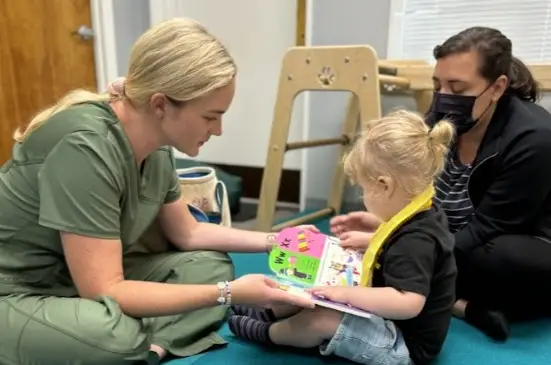
However, pediatric physical therapy is very different from what most people imagine. Unlike adult therapy sessions that often focus on repetitive exercises and structured routines, pediatric physical therapy is designed to feel like play. It is interactive, engaging, and tailored to your child’s developmental level.
At Therapy Smarts, we believe that the best results come when children feel comfortable, curious, and happy. Our goal during the first visit is not only to gather important clinical information but also to create a positive and supportive environment where your child can thrive.
Learn more about our approach to Pediatric Physical Therapy.
Before You Arrive (Preparation Tips)
- A little preparation can go a long way in ensuring that your child’s first visit is smooth and stress-free.
One of the most important considerations is what your child wears. Comfortable clothing that allows for easy movement is essential. Think of outfits that make it easy for your child to crawl, climb, jump, or stretch. Sneakers or supportive footwear are recommended, as they allow the therapist to observe walking and running patterns accurately.
You should also bring any relevant medical documents, such as a doctor’s referral, prior evaluation reports, or imaging results if available. These documents help the therapist gain a clearer understanding of your child’s background and current needs.
If your child tends to feel anxious in new environments, bringing along a favorite toy or comfort item can make a significant difference. Familiar objects often help children feel secure and more willing to engage.
Another simple but impactful step is completing all intake forms in advance. This allows you to focus fully on your child during the appointment instead of dealing with paperwork at the last minute.
Have questions about insurance coverage? Visit our Payments and Insurance page.
The Conversation (Your Child’s History)
The first part of the appointment typically involves a detailed conversation between you and the physical therapist. As a parent, you are the most valuable source of insight into your child’s development, behavior, and daily challenges.
During this discussion, the therapist will ask about your primary concerns. Whether it’s frequent tripping, delayed milestones, difficulty with coordination, or pain during movement, every detail helps build a clearer picture.
You may also be asked about your child’s pregnancy and birth history, especially for infants. Information such as premature birth, complications, or time spent in the NICU can provide important context.
Developmental milestones are another key area of focus. The therapist may ask when your child first rolled over, sat independently, crawled, or began walking. These milestones help determine whether your child is progressing within expected ranges or may need additional support.
Additionally, current functional challenges are discussed in depth. For example, does your child struggle to keep up with peers during play? Do they avoid certain physical activities? Are there signs of fatigue, imbalance, or discomfort?
Review age-appropriate skills in our Pediatric Milestones Guide.
The “Play” Assessment (The Evaluation)
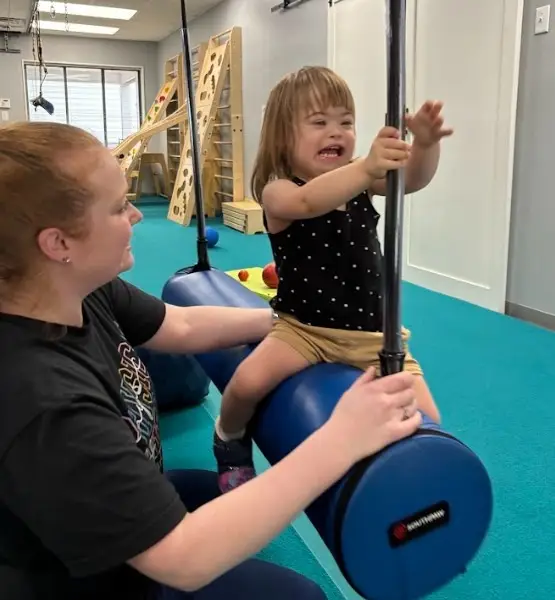
Our pediatric physical therapist tests strength and skills without it feeling like a test. Instead, it is structured as guided play, allowing the therapist to observe your child’s natural movement patterns.
The session begins with simple observation. The therapist watches how your child sits, stands, walks, and transitions between movements. Subtle signs—such as favoring one side, toe walking, or “W-sitting”—can provide valuable diagnostic clues.
The activities that follow are carefully designed based on your child’s age and developmental level.
- For babies, the therapist may assess head control, neck alignment, and tolerance for tummy time. They may also check for conditions such as torticollis or delays in rolling and reaching.
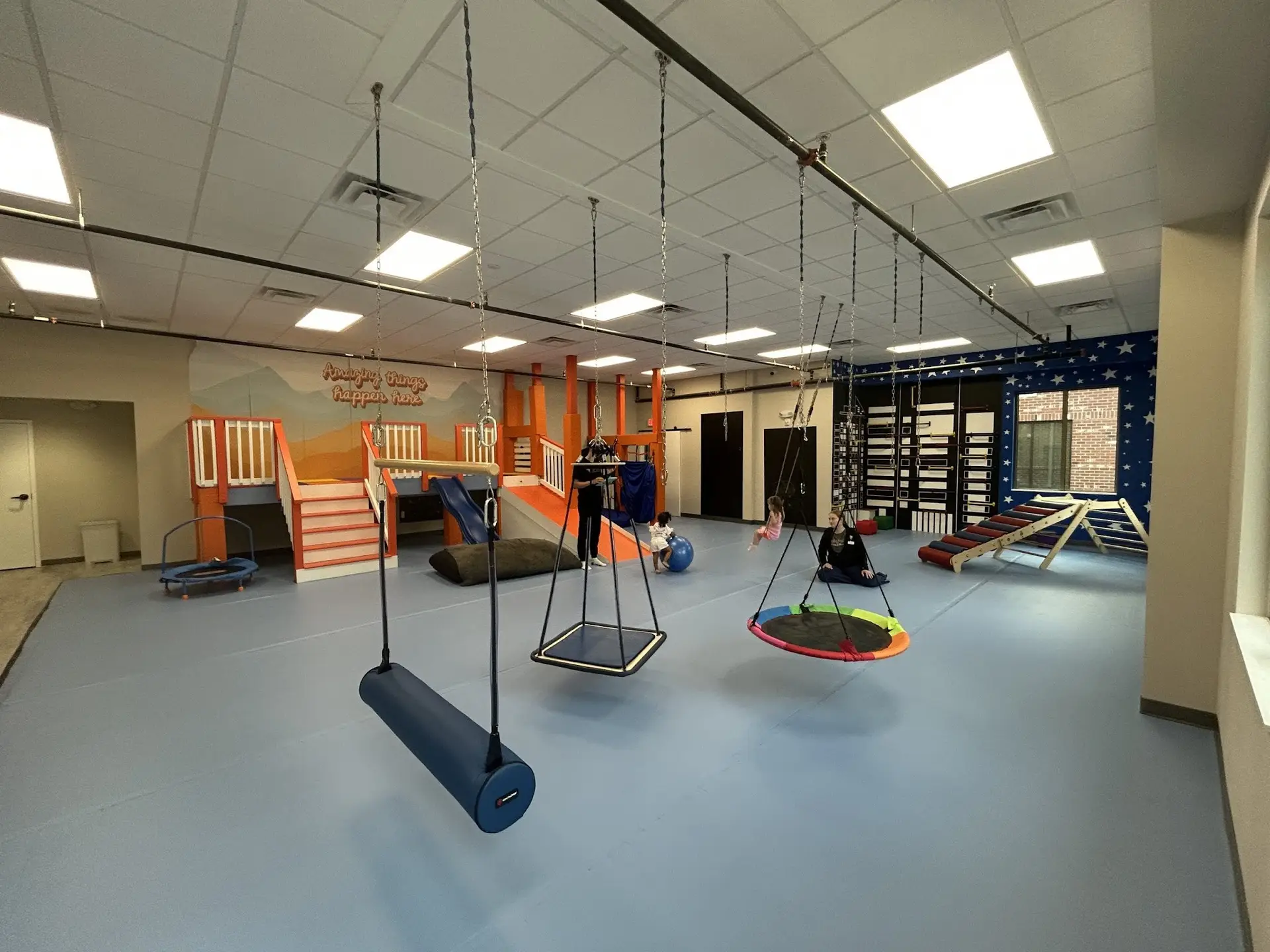
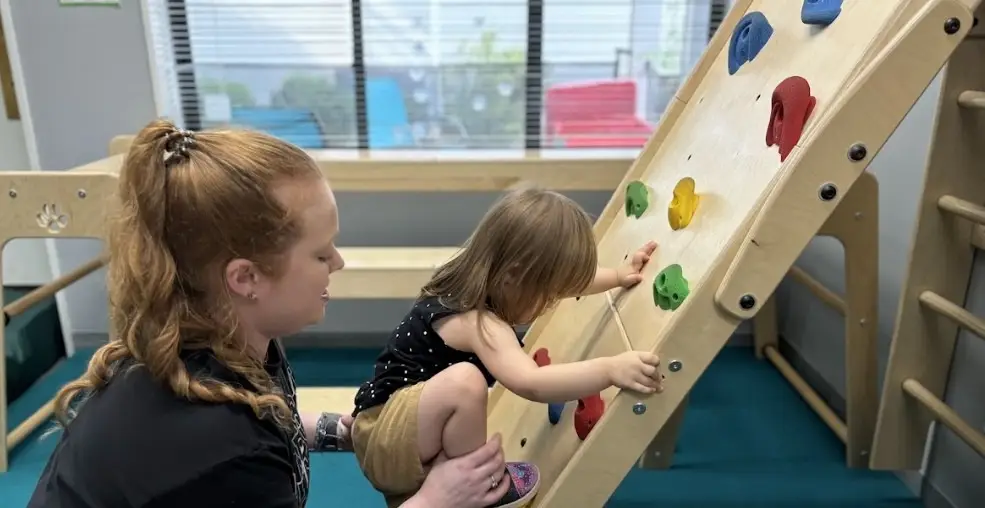
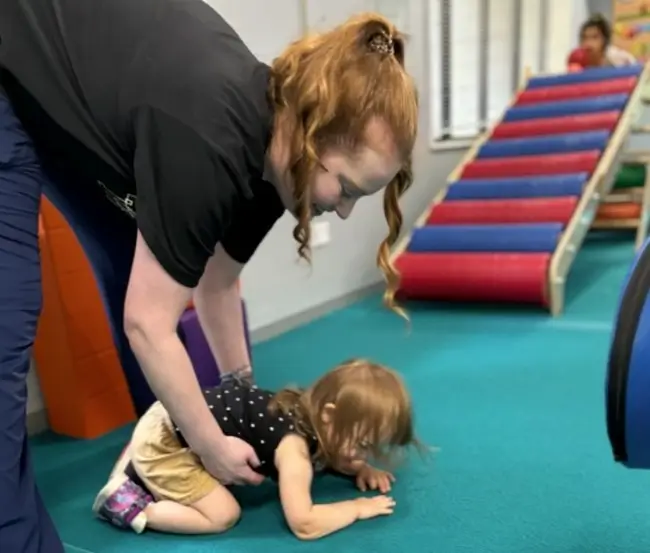
- For toddlers, therapy often looks like an obstacle course. Climbing over soft structures, stepping across surfaces, and navigating playful challenges help evaluate balance, coordination, and strength.
- For older children, the therapist may introduce activities such as single-leg hopping, jumping, catching or throwing a ball, and basic strength tasks. These activities help assess core stability, motor planning, and overall physical endurance.
Throughout the process, the therapist is not only evaluating physical abilities but also observing how your child responds to instructions, transitions between tasks, and interacts with the environment.
For early walkers, read our blog on The Benefits of Early Physical Therapy.
The Findings and The Plan
After the evaluation, the therapist will typically share their observations with you right away. This immediate feedback helps you understand what is happening and what steps can be taken next.
The therapist may identify specific factors such as low muscle tone (hypotonia), muscle weakness, balance issues, or coordination challenges. In some cases, the concerns may be mild and easily addressed with short-term intervention. In others, a more structured plan may be recommended.
A personalized plan of care is then developed. This plan includes clear, measurable goals tailored to your child’s needs. For example, goals might include improving stair navigation, increasing core strength, enhancing balance, or supporting developmental milestones such as crawling or walking.
The therapist will also recommend a therapy frequency, which is typically one to two sessions per week, depending on the severity and nature of the concern.
Importantly, this plan is not static. It evolves as your child progresses, ensuring that therapy remains effective, engaging, and goal-oriented.
The Whole-Child Advantage
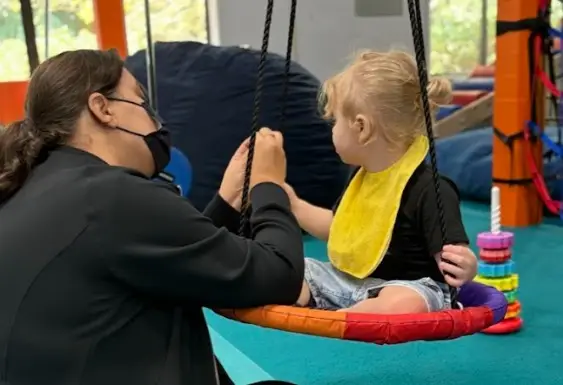
At Therapy Smarts, our approach goes beyond addressing muscles and movement—we focus on the whole child. Developmental challenges are often interconnected, and what may appear as a physical delay can sometimes be linked to underlying sensory or visual processing difficulties.
For instance, a child who struggles with balance or coordination may also have sensitivities to touch, sound, or movement. This is where the expertise of an Occupational Therapist becomes essential. An Occupational Therapist helps evaluate how sensory processing and daily functional skills may be influencing your child’s physical development.
Because Therapy Smarts follows a multidisciplinary model, collaboration is seamless. If our physical therapist observes that your child’s toe-walking or movement pattern may be connected to sensory sensitivities, we can involve an Occupational Therapist for a quick and effective consult. This integrated approach ensures that no aspect of your child’s development is overlooked.
We often collaborate with our Pediatric Occupational Therapy for complex cases.
Our Presence in the Triangle: Locations and Services
At Therapy Smarts, we proudly provide comprehensive pediatric physical therapy and occupational therapy services to families across the thriving Triangle region of North Carolina. We operate under a multidisciplinary model that allows our specialized Physical and Occupational Therapists to collaborate seamlessly, ensuring a whole-child approach that addresses everything from fine motor skills and sensory processing to gross motor challenges and developmental delays.
Our welcoming clinics are conveniently located to serve the community:
Therapy Smarts in Durham:
1920 NC-54 STE 240, 360, Durham, NC 27713