Premature Infant Therapy in Durham & Chapel Hill
What Classifies A Birth As Premature or Preterm Birth?

Infant prematurity, also called being “born premature” or “preterm birth,” happens when a baby is born before 37 weeks of pregnancy. A full-term pregnancy is typically around 40 weeks. Babies born early may need extra medical care and developmental support because their bodies and brains have had less time to fully develop.
Types of Infant Prematurity
Types of Prematurity
Doctors often classify prematurity by how early the baby is born:
- Late preterm: 34–36 weeks
- Moderately preterm: 32–34 weeks
- Very preterm: Less than 32 weeks
- Extremely preterm: Less than 28 weeks
The earlier a baby is born, the greater the chance they may need specialized medical and developmental support.
Common Challenges Premature Babies May Face
Premature infants can experience challenges with:
- Breathing and lung development
- Feeding and swallowing
- Muscle tone and strength
- Growth and weight gain
- Sleep regulation
- Sensory processing
- Vision or hearing
- Developmental milestones
- Speech and language development
Some premature babies catch up quickly, while others may benefit from early intervention services such as physical therapy, occupational therapy, or speech therapy.
Signs Parents May Notice as Their Baby Grows
Parents of premature babies may notice:
- Delays with tummy time tolerance
- Difficulty holding the head up
- Challenges with feeding
- Increased stiffness or floppiness
- Delayed rolling, sitting, or crawling
- Sensitivity to sound, touch, or movement
- Delayed speech or communication skills
Doctors and therapists often use a baby’s “adjusted age” when tracking milestones. Adjusted age accounts for how early the baby was born. For example, if a baby was born 2 months early and is now 6 months old, their adjusted developmental age may be closer to 4 months.
How Therapy Smarts Supports Premature Babies
with Their Development and Reaching Milestones
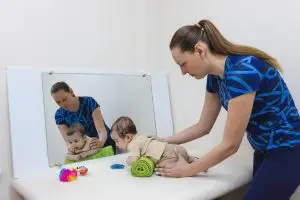
While a diagnosis of Prematurity comes with unique challenges, it also comes with incredible potential. At Therapy Smarts, our multidisciplinary team in Durham and Chapel Hill works together to create a customized “roadmap” that helps your child hit their milestones and gain independence.
Building Strength and Mobility (Physical Therapy)
Early intervention can help premature babies build important skills and support healthy development. Pediatric therapists may help with:
- Gross motor skills like rolling, crawling, and walking
- Fine motor and sensory development
- Feeding and oral motor skills
- Communication and language development
- Parent education and home activities
Enhancing Communication and Feeding (Speech Therapy)
Communication is the bridge to connection. Because children with Prematurity often face challenges with speech clarity or language delays, our Speech-Language Pathologists (SLPs) provide:
Many premature babies can become easily overwhelmed by sensory input. Therapy Smarts occupational therapists help children learn to process and respond to sensory experiences in a calmer and more organized way. This can improve participation in daily routines, sleep, feeding, and play.
Oral Motor Therapy: Exercises to strengthen the tongue and jaw for clearer speech.
Total Communication Support: Using signs, gestures, or AAC (Augmentative and Alternative Communication) to reduce frustration while verbal speech develops.
Feeding Therapy: Specialized support for chewing and swallowing safety, ensuring your child gets the nutrition they need to thrive.
Developing Independence and Fine Motor Skills (Occupational Therapy)
Our Occupational Therapists (OTs) focus on “the job of being a kid.” We help children master the daily skills they need for home and school, including:
Fine Motor Coordination: Strengthening small hand muscles for writing, using scissors, or buttoning clothes.
Self-Care Skills: Practical training for feeding themselves, dressing, and grooming.
Sensory Integration: Helping children process information from their environment so they can stay focused and calm in the classroom.
Social and Behavioral Growth (ABA Therapy & Mental Health Support)
For children who need extra support with social cues or behavioral regulation, our ABA and Mental Health teams offer a supportive environment to:
Build positive social interactions with peers.
Increase attention span and classroom readiness.
Support emotional regulation and confidence-building.
Wondering About Developmental Milestones?
Have questions about your child’s development, or wondering if a certain diagnosis may be a fit? Try out our developmental screening tool— it’s a fast, free way to get a snapshot of your child’s progress on his or her developmental milestones.
Ready to Help Your Child Reach Their Full Potential?
At Therapy Smarts, we don’t believe in a “wait and see” approach. We believe in early, expert intervention that gives your child the tools they need to thrive. Whether you are looking for specialized Premature Birth support or a comprehensive developmental evaluation, our award-winning team in Durham and Chapel Hill is ready to partner with your family.
Two Easy Ways to Begin:
Contact Us Directly: Ready to schedule? Call us at 919-378-1340.
Fill out our Online Inquiry Form to speak with a member of our intake team.
Don’t navigate this journey alone—let’s unlock your child’s possibilities together