
"Tummy Time" For Babies and Pediatric Physical Therapy In Durham & Chapel Hill
What is Tummy Time?


When and Why Should We Start Tummy Time?
You can start tummy time as early as the first few days after birth, once you are home from the hospital. Start with very short sessions — even just 1–2 minutes at a time.
Tummy time helps babies:
- Strengthen neck, back, shoulder, arm, and core muscles
- Improve head and neck control
- Prepare for rolling, sitting, crawling, and reaching
- Develop visual tracking and coordination
- Build endurance for upright sitting and play
- Reduce pressure on the back of the head
- Support healthy motor development
Tummy time should always be done while your baby is awake and supervised. Babies should always be placed on their backs to sleep.
How Does A Pediatric Physical Therapist Help with
Tummy Time?
A pediatric physical therapist can help make tummy time safer, more comfortable, and more successful for babies who may be struggling with strength, positioning, or developmental milestones. At Therapy Smarts, our pediatric physical therapists work closely with families to teach tummy time techniques that support healthy motor development while helping babies build confidence and tolerance in the position.
A pediatric physical therapist may help by:
- Teaching parents safe and effective tummy time positions
- Showing ways to make tummy time more engaging and enjoyable
- Helping babies improve head, neck, shoulder, and core strength
- Addressing tight muscles, torticollis, or head-turning preferences
- Providing positioning strategies using towels, wedges, or therapy balls
- Encouraging reaching, rolling, crawling, and early movement skills
- Monitoring developmental milestones and motor progression
- Helping reduce flat spots on the head caused by prolonged back positioning
- Creating personalized home exercise programs for families
Some babies may struggle with tummy time due to muscle weakness, prematurity, reflux, sensory sensitivities, torticollis, or developmental delays. A pediatric physical therapist can identify these challenges early and create a plan tailored to your child’s unique needs.
How Much Tummy Time Does A Baby Need?
Here’s a general guide:
- Newborns: 1–2 minutes several times a day
- 1 month: About 10–15 minutes total per day
- 2 months: Around 20–30 minutes total per day
- 3–4 months: Work toward 60–90 minutes total per day (spread throughout the day)
What Should My Baby Be Doing During Tummy Time?
0–3 Months: Your baby may begin lifting or turning their head.
3–6 Months: Your baby may start pushing up through their arms, looking around, reaching for toys, and bringing hands or toys to their mouth.
6–9 Months: Your baby may begin pivoting, reaching, moving backward, or trying to move forward while on their tummy.
9–12 Months: Your baby may push up onto hands and knees, rock back and forth, and begin preparing for crawling.
Every child develops at their own pace, but if you are concerned about your baby’s milestones, Therapy Smarts can help.
What If My Baby Doesn't Like Tummy Time?
Many babies resist tummy time at first because it takes strength and effort. Keep practicing in short, positive sessions.
Try these tummy time tips:
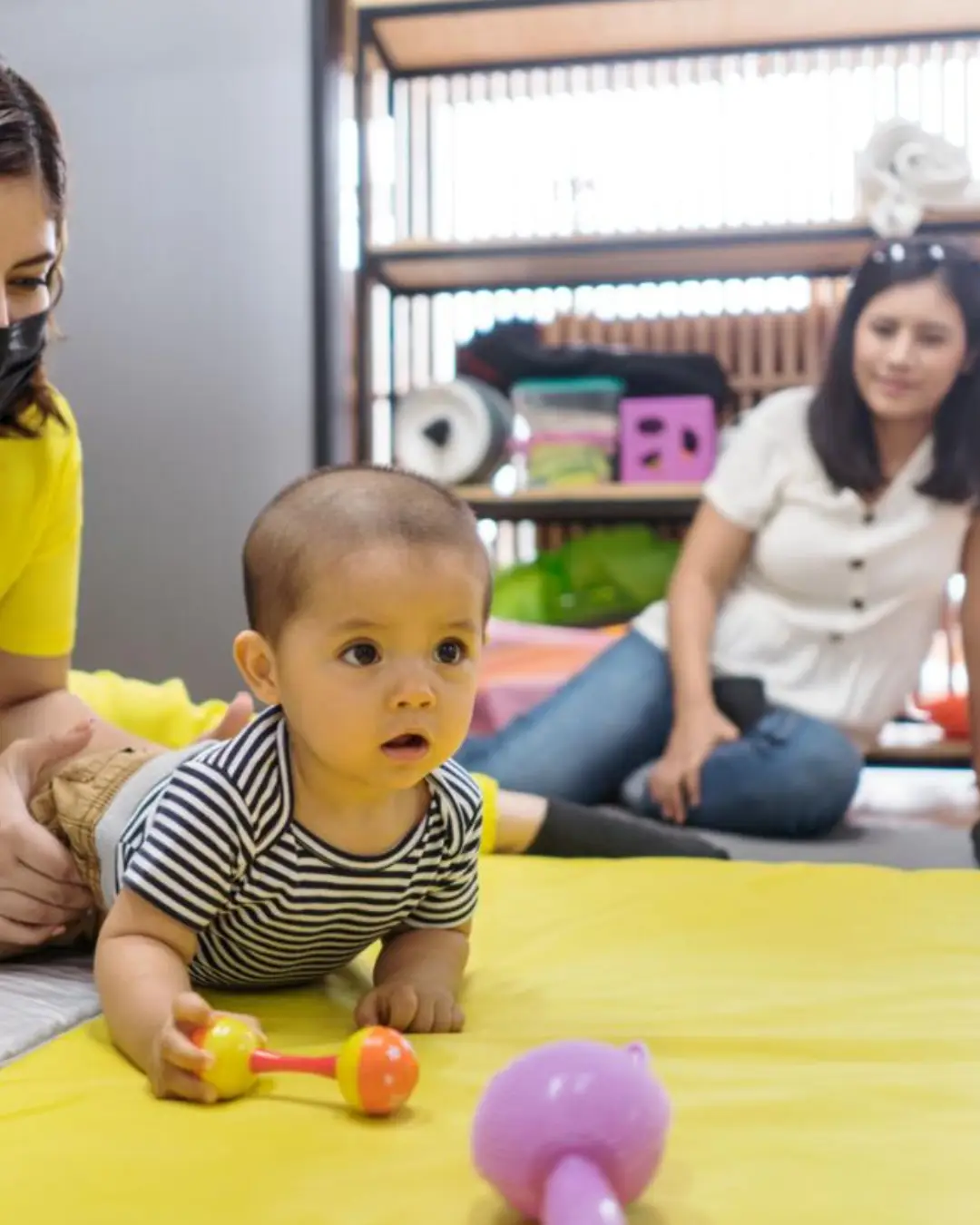
- Get on the floor face-to-face with your baby
- Use toys, mirrors, music, or your voice
- Try tummy time on your chest while you recline in a chair
- Keep sessions short and repeat throughout the day
- Celebrate small progress!
The goal is not perfection—it is practice. Tummy time should be fun and provide learning opportunities.
Remember to place your child on their back to sleep should they begin to fall asleep.
Tips On How To Make Tummy Time More Enjoyable For
the Parent and the Baby
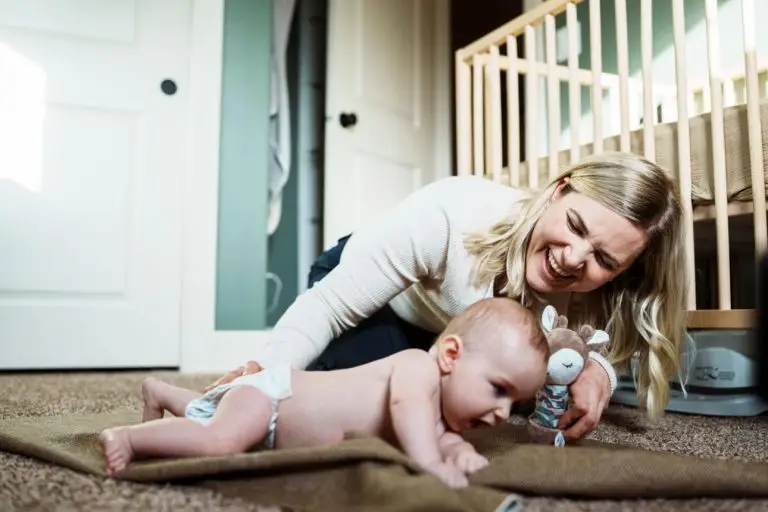
Tummy time is one of the best positions to support infant development and early milestones. Introducing tummy time early and making it part of your baby’s daily routine can help improve their comfort and tolerance as they grow. While spending time on their tummy, babies strengthen important muscles in the head, neck, shoulders, arms, and core while also developing coordination and motor skills as they begin reaching for toys and exploring their environment.
Here are a few ways to help make tummy time more enjoyable for both babies and caregivers:
- Place a small rolled towel under your baby’s chest with their arms positioned over the towel for added support. Make sure their chin stays in front of the towel to keep the airway clear.
- Get down on the floor face-to-face with your baby to talk, smile, sing, and interact during tummy time.
- Use a baby-safe mirror to encourage your child to lift and turn their head while looking at themselves.
- Try tummy time on a caregiver’s chest, especially for newborns, to help them feel safe and comfortable while getting used to the position.
- Side-lying is another excellent alternative to help babies spend less time on their backs. A rolled towel placed gently behind their back can provide extra support and security in this new position.
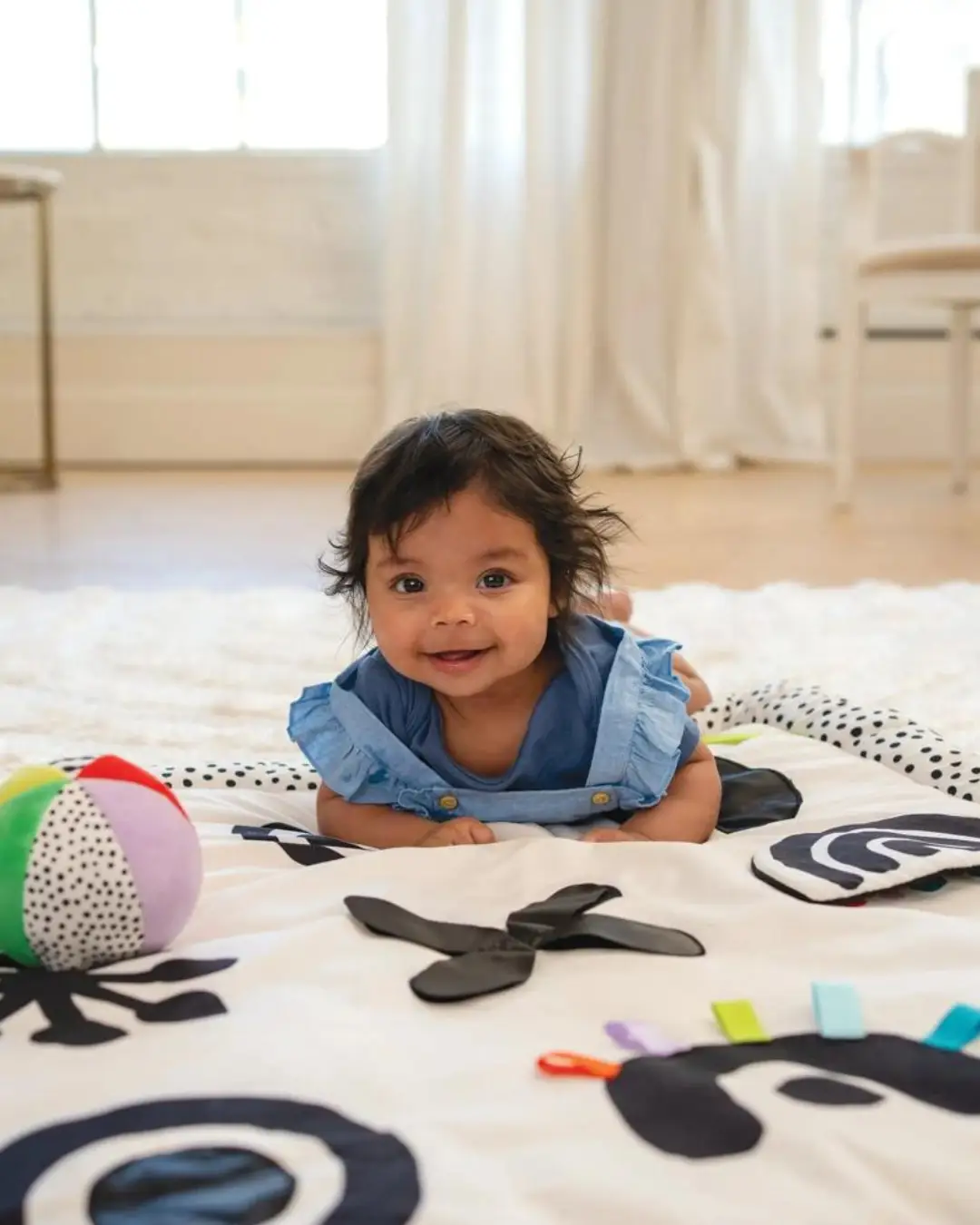
- Using a colorful blanket, tummy time mat, or play gym can make tummy time more engaging and exciting for babies. Bright colors, fun patterns, different textures, and interactive toys help capture your baby’s attention and encourage them to lift their head, turn toward sounds, and reach for objects during play. This is the PERFECT time to pull out that blanket you never thought you would use from your baby shower!
At Therapy Smarts, our pediatric physical therapy and occupational therapy teams help families across Durham, Chapel Hill, and the Triangle support healthy motor development and milestone progression from the very beginning.
Wondering About Developmental Milestones?
Have questions about your child’s development, or wondering if a certain diagnosis may be a fit? Try out our developmental screening tool— it’s a fast, free way to get a snapshot of your child’s progress on his or her developmental milestones.
Ready to Help Your Child Reach Their Full Potential?
At Therapy Smarts, we don’t believe in a “wait and see” approach. We believe in early, expert intervention that gives your child the tools they need to thrive. Whether you are looking for specialized Tummy Time support or a comprehensive developmental evaluation, our award-winning team in Durham and Chapel Hill is ready to partner with your family.
Two Easy Ways to Begin:
Contact Us Directly: Ready to schedule? Call us at 919-378-1340.
Fill out our Online Inquiry Form to speak with a member of our intake team.
Don’t navigate this journey alone—let’s unlock your child’s possibilities together
Have Questions? We are Here to Help
Pediatric Physical Development & Milestones Checklist
Holds head in alignment
- Tracks an object
- Moves arms and legs when laying on back
- Lifts head a little when laying on belly, can prop on elbows
- Brings hands together when laying on back
- Props on elbows in prone with neck extension
- Rolls back to side
- Grasps rattle when placed in hand
- Likes looking at a human face more than other things
- Responds to a smile with a smile
- Looks into caregiver’s face and eyes with interest
- Reaches toward and touches toy
- Hits at dangling objects with hands
- Sitting using hands for support and starting to sit independently
- Grabs both feet and holds them when on back
- Brings feet to mouth
- Reaches to a toy when playing on belly
- Props on extended arms when on belly
- Begins to belly crawl
- Rolls back to belly
- Holds and shakes a toy
- Puts fingers in mouth
- Smiles at self in front of mirror
- Assumes hands and knees position (all fours)
- Transfers from sitting to hands and knees position (all fours)
- Rocks back and forth on hands and knees for 5 seconds
- Creeps forward on hands and knees
- Scoots forward in sitting for 3 feet
- Pivots in sitting 90 degrees to both sides
- Walks with two hands held
- Transitions to stand using hands and feet
- Walks 8 feet with one hand held
- Walks 5 steps independently
- Traps a ball with arms and hands in sitting
- Maintains kneeling position on knees for 5 seconds
- Stoops to retrieve object from the floor without using a stable surface and takes 3 steps
- Rolls a ball 3 feet forward in sitting
- Flings a small ball while standing
- Creeps downstairs independently
- Walks upstairs with both rails – non alternating
- Lifts foot to contact ball
- Throws ball overhand without loosing balance
- Walks fast
- Walks Backward 5 steps
- Walks downstairs with support of one finger, non-alternating
- Runs forward 10 feet
- Stands heel to toe on a line for 2 seconds
- Kicks ball 3 feet
- Throws ball overhand 3 feet
- Rides a push bike
- Jumps forward 4 inches
- Jumps up 2 inches
- Jumps down from step
- Walks upstairs without rail
- Throws ball underhand 3 feet
- Kicks ball 3 feet with direction
- Climbs up jungle gym
- Walks down 4 steps without rail
- Walks backward for 10 feet
- Presents arms and attempts to catch ball
- Negotiates slide independently
- Takes three consecutive steps when walking on a line – hands on hips
- Walks upstairs with a rail alternating feet
- Throws ball 7 feet overhand
- Walks across a 6 inch balance beam
- Runs 45 feet in 6 seconds
- Jumps forward 26 inches
- Throws ball overhand
- Throws ball underhand to hit target from 5 feet
- Stands on one foot with hands on hips for 5 seconds
- Walks 4 feet on a line with hands on hips
- Catches large ball hands only 5 feet (not using chest to trap the ball)
- Climbs down rock wall independently
- Stands on tiptoes with arms overhead for 3 seconds
- Walks downstairs without a rail using an alternating pattern
- Hops forward 6 inches on 1 foot
- Throws ball overhand to hit target from 5 feet
- Stands on tiptoes for 8 seconds
- Walks backwards on a line 5 steps with hands on hips
- Performs a forward roll
- Gallops 10 feet
- Throws overhand to hit target from 12 feet
- Bounces a ball so it hits floor then wall
- Catches a small ball thrown from 5 feet hands only
- Rides a 2 wheeler with training wheels
- Rides a 2 wheeled scooter
- By 4.5 years old stands on one foot for 6 seconds
- Imitates 4 positions with arms and legs
- Jumps forward 36 inches
- Performs a turning jump
- Hops forward 3 feet on each foot
- Jumps over 10 inch hurdle
- Skips 8 feet
- Pumps self on swing
- Able to jump over a partner turned jump rope
- Able to roller skate – without coordination
- Stands on one foot for 10 seconds with hands on hips
- Performs 3 sit-ups in 30 seconds
- Jumps sideways over a line 3 cycles
- Skips 10 feet
- Skips 10 feet
- Jumps over 10 inch hurdle
- Skips 10 feet
- Able to jump over a self turned jump rope several consecutive times
- Performs 5 sit-ups in 30 seconds
- Performs 8 push-ups in 20 seconds
- Hops 20 feet in 6 seconds
- Kicks a ball 12 feet in the air
- Bounce catches a ball with one hand
- Takes three consecutive steps on a 2 inch balance beam
- Able to roller skate – with coordination
- Able to perform the monkey bars
- Drop kicks a ball with direction
- Able to Rollerblade
- Runs with good coordination
- Able to perform sit-ups
- Skips, alternating feet
- Performs jumping jacks
- Able to hop on one foot several times consecutively
- Throws a ball and hits target
- Swings without being pushed & pumps legs to keep the swing going