
Pediatric speech therapy in Cary, NC helps children strengthen communication skills such as speech clarity, language development, social interaction, fluency, and understanding directions. Therapy Smarts supports Cary families with individualized, play-based care through nearby Durham and Chapel Hill clinics, as well as eligible teletherapy services, and can coordinate speech therapy with occupational therapy, ABA, feeding therapy, physical therapy, and dyslexia support when children have overlapping needs.
When You Notice Your Child May Need More Support
If you are a Cary parent who has noticed something “different” about your child’s communication, play, eating, movement, or ability to handle everyday routines, you are not alone. Concerns can start small: perhaps your toddler is not using many words, your child becomes frustrated when others do not understand them, or school has raised questions about following directions or social interaction.
Wondering what to do next does not mean something is wrong with your child—or with your parenting. It means you are paying attention. Therapy Smarts supports children and families throughout the Triangle with play-based, family-centered pediatric services, including speech, occupational, feeding, physical, and ABA therapy. With locations in Durham and Chapel Hill plus selected virtual care options, Cary families can explore support without having to navigate the process alone.
What Is Pediatric Speech Therapy — And Does My Child Need It?
Pediatric speech therapy helps children communicate, connect, learn, and participate more comfortably in daily life. A child speech therapist, also called a speech-language pathologist (SLP), does much more than help with pronunciation. They look at the many skills behind communication, including understanding language, using words and sentences, social interaction, speech clarity, stuttering, voice, and oral-motor skills related to eating and speaking.
For some children, speech therapy in Cary, NC may focus on saying specific sounds more clearly. For others, it may involve learning how to express needs, follow directions, take turns in conversation, or use communication tools such as signs, picture systems, or augmentative and alternative communication (AAC).
Every child develops differently, so one missed milestone does not automatically mean a child needs services. Still, an evaluation can give you clarity, practical strategies, and a personalized plan if support is recommended. Therapy Smarts uses engaging, play-based approaches designed around each child’s strengths and needs.
Common Signs That May Indicate Speech Therapy Is Needed
Consider speaking with a speech-language pathologist in Cary, NC or the surrounding Triangle if your child:
- Has a limited vocabulary or is not combining two words by age 2.
- Is difficult for unfamiliar adults to understand after age 3.
- Becomes upset, withdrawn, or frustrated when trying to communicate.
- Avoids talking with peers or participating in conversations.
- Has trouble understanding directions, especially multi-step instructions.
- Stutters for more than three months or shows visible tension while speaking.
- Does not use words or gestures to communicate by around 12 months.
Early support can help children build communication skills during important developmental years. Even when ongoing therapy is not needed, an evaluation can help parents understand what to watch for and how to encourage communication at home.
How Therapy Smarts Serves Cary Families
Parents searching for pediatric therapy Cary North Carolina often want one thing above all: clear answers from professionals who see the whole child. Therapy Smarts brings several pediatric specialties together so families can pursue coordinated care rather than managing separate providers with disconnected goals.
The practice offers speech-language therapy, occupational therapy, feeding therapy, physical therapy, mental health therapy, psychological evaluations, and Applied Behavior Analysis (ABA) services for children in the Triangle. Its care model emphasizes play, exploration, joyful engagement, and collaboration with parents, caregivers, teachers, physicians, and other members of a child’s support team.
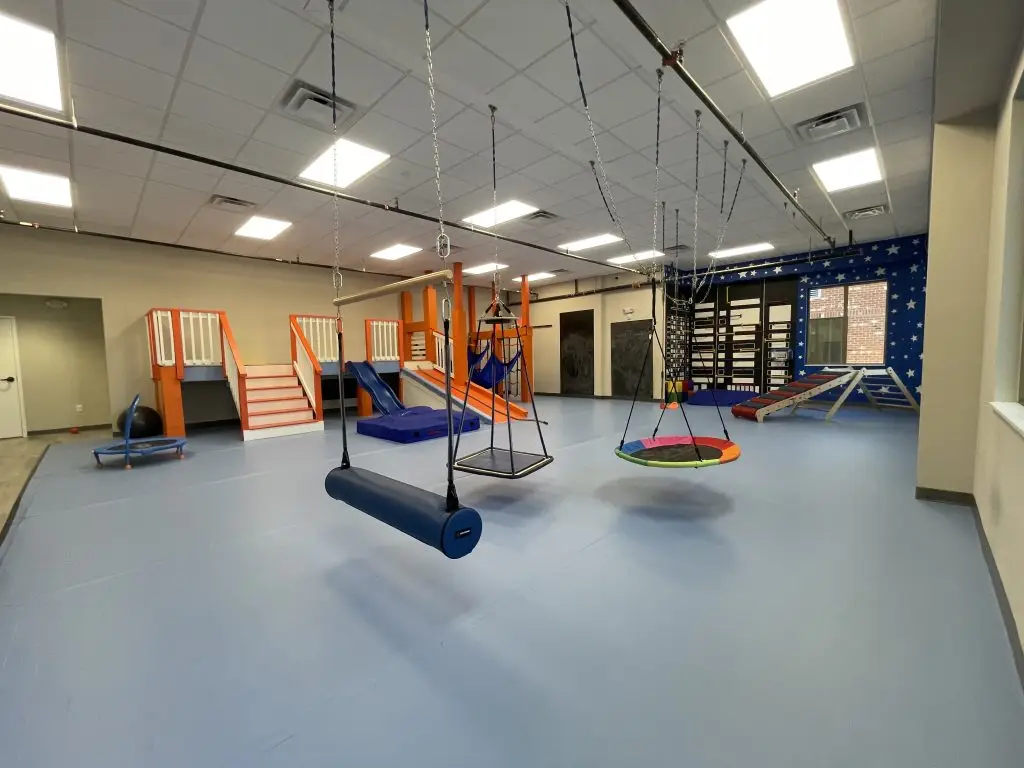
For Cary families, the nearby Durham clinic and Chapel Hill clinic provide in-person care. Both locations include child-focused therapy environments, and the clinics offer multiple services under one roof.therapysmarts+1
Getting to Our Clinics From Cary

Depending on your starting point and traffic, Cary families may find the Durham location accessible via I-40 and NC-540, while the Chapel Hill location may be reached using US-1 and US-15/501 routes. Before scheduling, check your preferred mapping app for the most accurate travel time.
If travel, schedules, or family routines make in-person appointments difficult, ask about teletherapy options. Virtual services may be available when clinically appropriate and covered by insurance; not every service or child is best served remotely.
Diagnosis We Treat: Speech, OT, ABA, Feeding, and More
Children’s needs rarely fit into one neat category. A child receiving pediatric speech therapy in Cary, NC may also benefit from help with sensory needs, feeding, motor development, behavior, or early reading skills. We provide a broad range of services so care can be coordinated around your child—not organized around a label.
Speech delays and language disorders: A speech delay may affect how clearly a child talks, while a language disorder can affect how they understand or use words, sentences, and conversation. Through pediatric speech-language therapy, SLPs support articulation, language development, social communication, fluency, auditory processing, and oral-motor skills. Earlier guidance can give children more opportunities to practice communication in school, play, and family life.
- Sensory processing and occupational therapy: Some children have trouble tolerating sounds, textures, movement, grooming, transitions, or daily tasks such as dressing and handwriting. Occupational therapy for children can help build practical skills, support sensory regulation, and improve participation in routines that matter to the child and family. Therapy Smarts offers occupational therapy alongside other pediatric services, which can be especially helpful when sensory needs affect communication, play, or feeding.
- ABA therapy for autism: Families researching ABA therapy Cary, NC may be looking for support with communication, adaptive skills, social participation, or behavior. An ABA therapy program can be one part of an individualized autism therapy plan, alongside speech, OT, or other services when appropriate. Coordinated planning helps families focus on meaningful daily goals rather than treating one concern in isolation.
- Feeding therapy and picky eating support: Persistent food refusal, a very limited diet, difficulty chewing, gagging, or challenges swallowing can make meals stressful for the whole household. Feeding therapy may address sensory, oral-motor, and communication-related factors that affect eating. A supportive evaluation can help identify whether a child’s eating habits are typical selectivity or a sign that more specialized help may be useful.
- Dyslexia and reading support: Reading struggles can involve speech-sound awareness, language processing, decoding, comprehension, or confidence at school. Dyslexia support can help identify a child’s learning profile and create targeted strategies for literacy development. Getting support early may prevent repeated frustration from becoming a barrier to participation and self-esteem.
- Physical therapy and gross-motor delays: If a child struggles with balance, coordination, strength, walking, running, stairs, or playground activities, pediatric physical therapy may help. Gross-motor development affects a child’s ability to explore, play, and participate with peers. Therapy Smarts includes physical therapy within its broader pediatric service offering.
What to Expect During Your Child’s First Appointment
A first appointment is not a pass-or-fail test. It is a discovery process: a chance to understand what your child does well, what feels difficult, and what support could make daily life easier.
The process usually begins with intake paperwork and a conversation about your concerns, your child’s medical and developmental history, school or daycare experiences, and your family’s goals. Bring any reports, school notes, previous evaluations, or referral information you have—but do not worry if you do not have everything. The team can guide you through what is needed.
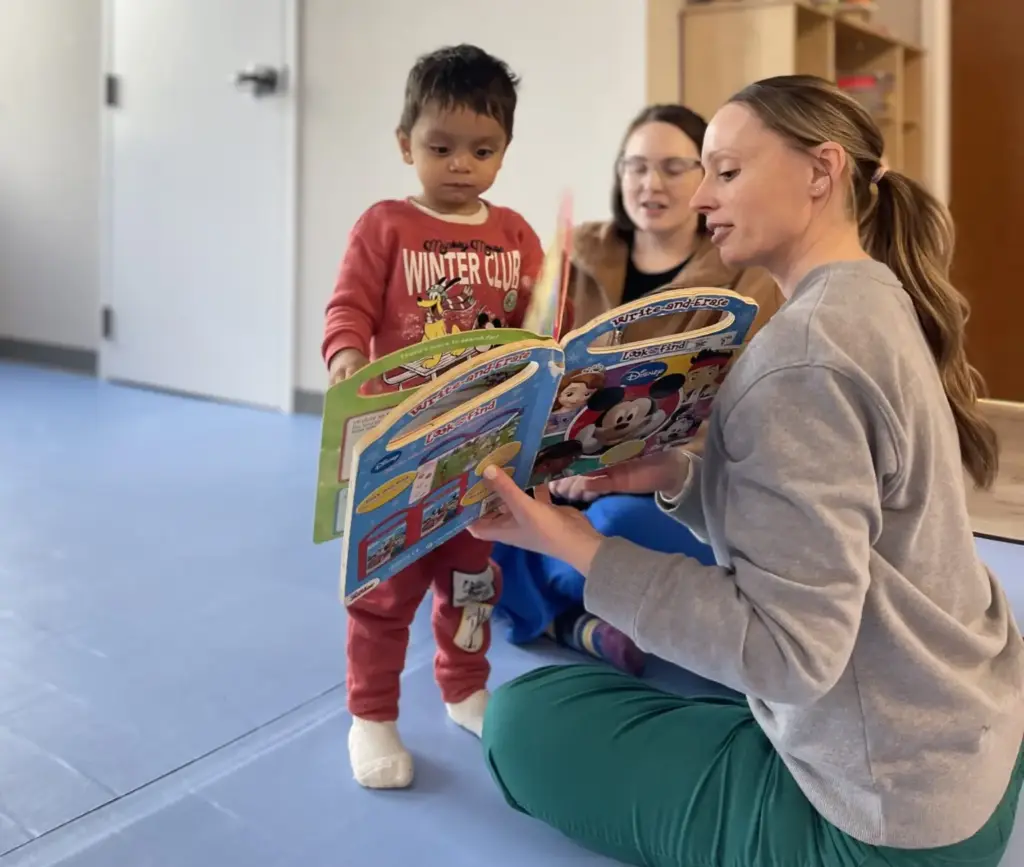
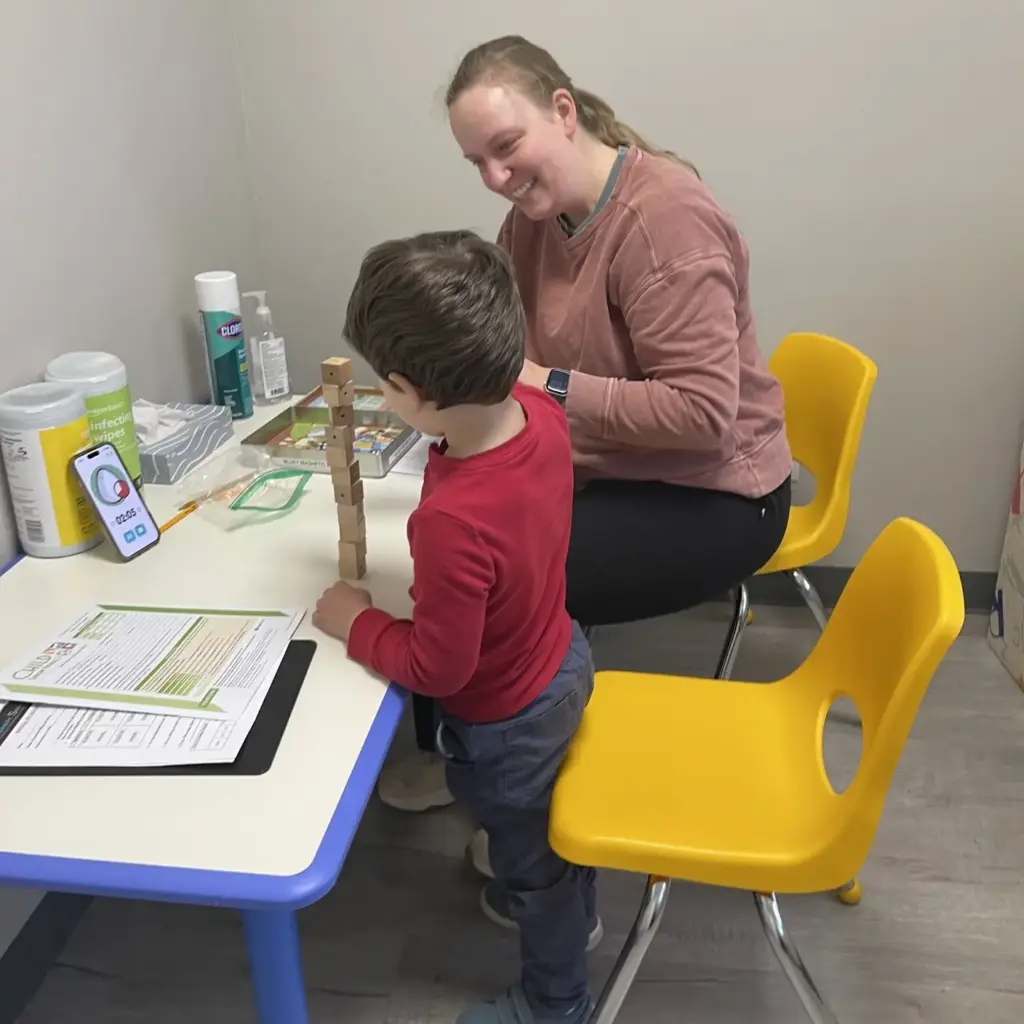
During the evaluation, your child’s therapist may use toys, books, games, conversation, movement, or structured activities to observe skills naturally. For speech therapy, an SLP may look at how your child understands language, communicates needs, produces sounds, interacts socially, and responds to directions. Therapy Smarts describes its evaluations as individualized, play-based, and centered on rapport so children can feel comfortable and engaged.
Afterward, you will discuss findings, ask questions, and talk through recommendations. If therapy is appropriate, the provider can help establish meaningful goals—such as clearer speech, more words, easier mealtimes, stronger independence, or better participation at school.
Tips for Supporting Your Child’s Progress at Home
Therapy works best when children have many low-pressure chances to use new skills in everyday life. You do not need to turn your home into a clinic. Small, consistent moments can make a real difference.
- Read together every day. Pause to name pictures, ask simple questions, and let your child turn pages or finish familiar phrases.
- Narrate daily routines. Talk through what you are doing: “We are washing hands,” “The water is warm,” or “First shoes, then outside.” Repetition helps link words to experiences.
- Follow your child’s lead in play. Join the activity they choose, describe what they are doing, and add one small language step. If they say “car,” you might say, “Fast red car!”
- Create communication opportunities. Put a favorite toy or snack slightly out of reach so your child has a reason to gesture, sign, point, use a picture, or ask for help.
- Reduce background distractions. Turning off television or setting aside devices during meals, books, and play can make it easier for children to notice language and participate in conversation.
Your child’s therapist can tailor these ideas to their goals. Parent involvement is part of Therapy Smarts’ family-centered approach, with a focus on strategies that carry over into home, school, and community life.
Frequently Asked Questions — Speech Therapy in Cary, NC
Does Therapy Smarts accept insurance for Cary families?
Therapy Smarts states that it accepts major insurance plans and can provide superbills for clients using non-participating insurance companies. Coverage varies by plan, so ask the team to review your benefits before care begins. Visit insurance and billing or contact the practice for plan-specific guidance.
How long does speech therapy take for young children?
Progress is individual. The length and frequency of therapy depend on your child’s needs, goals, attendance, opportunities to practice, and response to treatment. Therapy Smarts notes that speech sessions typically last about 30 minutes and may be scheduled one to two times per week, based on the child’s therapy plan. Progress is reassessed every 6 months.
Can my child receive both speech therapy and occupational therapy at Therapy Smarts?
Yes. Therapy Smarts offers speech therapy, occupational therapy, ABA, physical therapy, feeding therapy, and other services. This can make it easier to coordinate care when a child has overlapping communication, sensory, motor, behavior, or feeding needs.
Do you offer teletherapy for Cary families who cannot travel?
Teletherapy may be available for clinically appropriate services and insurance plans. Therapy Smarts provides secure video-based therapy options for select speech, occupational, and mental health services, though in-person care may be recommended for children who need hands-on support or specialized equipment.
If you are worried about a speech delay, sensory concerns, feeding difficulties, or developmental changes, you do not have to wait until you have every answer. Reach out to Therapy Smarts to schedule an evaluation and begin a conversation about the support that may fit your child best.
You Don’t Need to “Wait and See” Alone
That quiet feeling that something may be harder for your child than it should be is worth listening to. You do not need a diagnosis, a perfect explanation, or all the right words before asking for support—you just need a place to start.
At Therapy Smarts, we turn parent questions into a clear next step. Our team takes the time to understand your child’s strengths, the everyday moments that feel challenging, and the goals that would make the biggest difference for your family—from being understood at preschool to making mealtimes calmer or transitions easier.
Bring us your questions. We’ll help build the roadmap. Schedule your child’s evaluation and take the next step with a team that sees more than a symptom—they see your whole child.